
This’ll be a short post, because it’s not about a huge discovery or incredible cave, but just a neat trip to some nice caves with pretty pictures.
The Guadalupe Mountains (or “the Guads” as they’re often called), which have some of the nicest caves in New Mexico1, are a rugged, wild, and unforgiving mountain range. They are full of fins and spires, layered in a colorful maze that makes traveling in the range difficult, but always a worthy challenge.
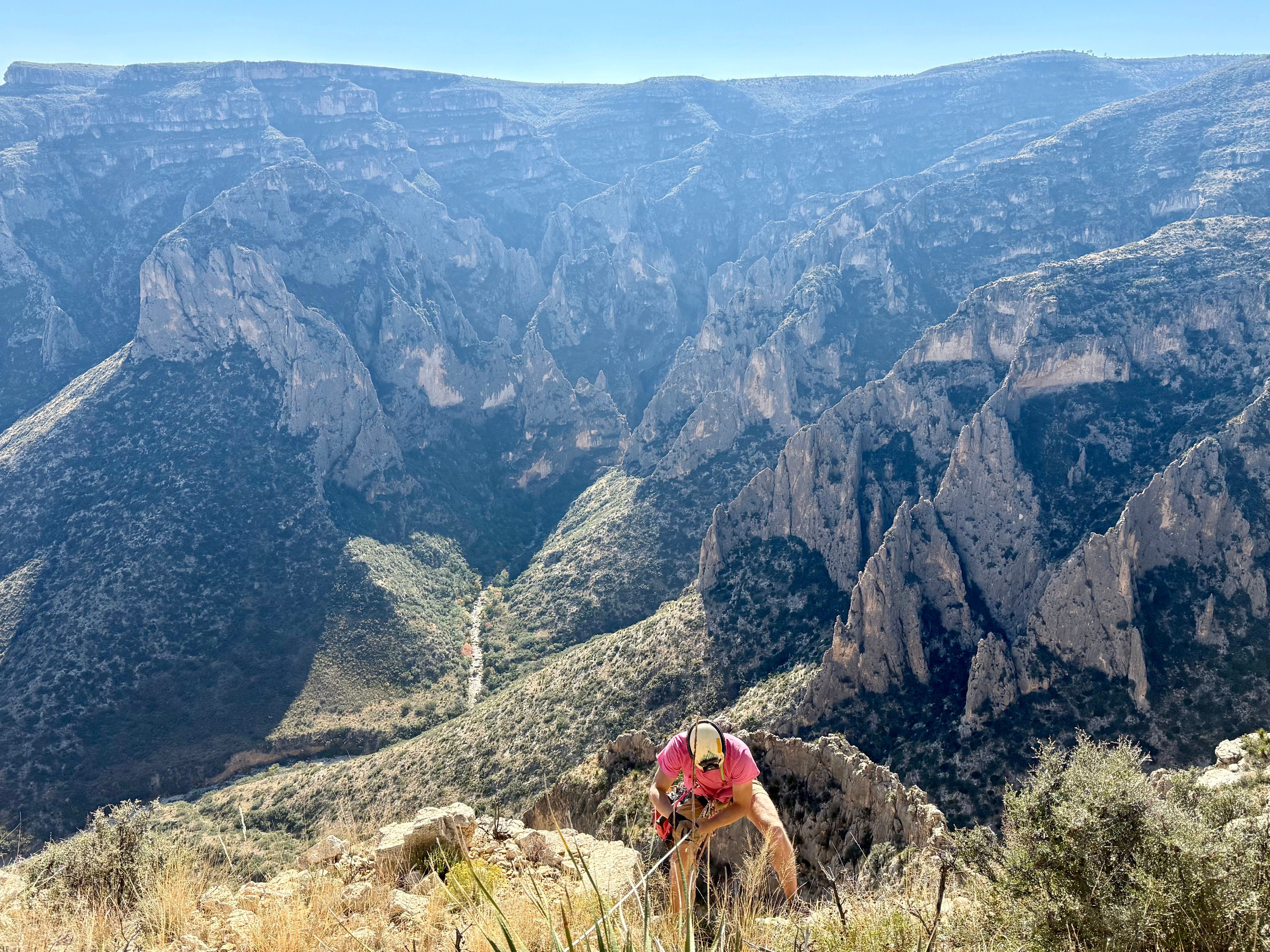
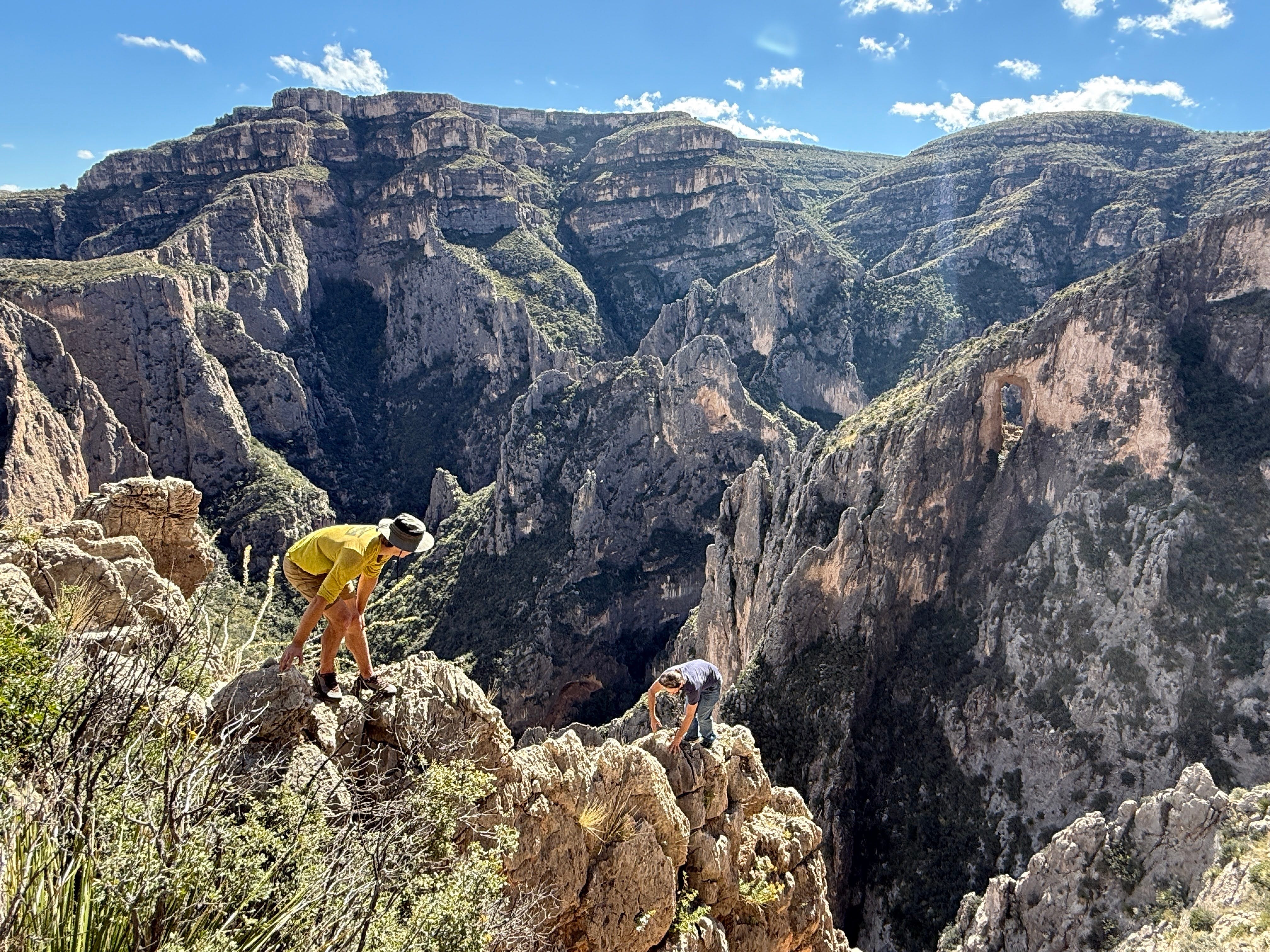
Getting around the Guads typically means sticking to an arroyo in a canyon bottom if approaching from the east side/from below, or sticking to a broad ridge if approaching from the west side/from above. One can drive around to the top from the west, where the mountains gently slope up from below. But on the east side, the mountains dramatically plunge down towards the canyons, forming forbidding series of cliffs that make traveling between two different elevations not straightforward. Getting from a high ridge to a low arroyo can be a puzzle that can be solved with any combination of walking, scrambling, or rappels.
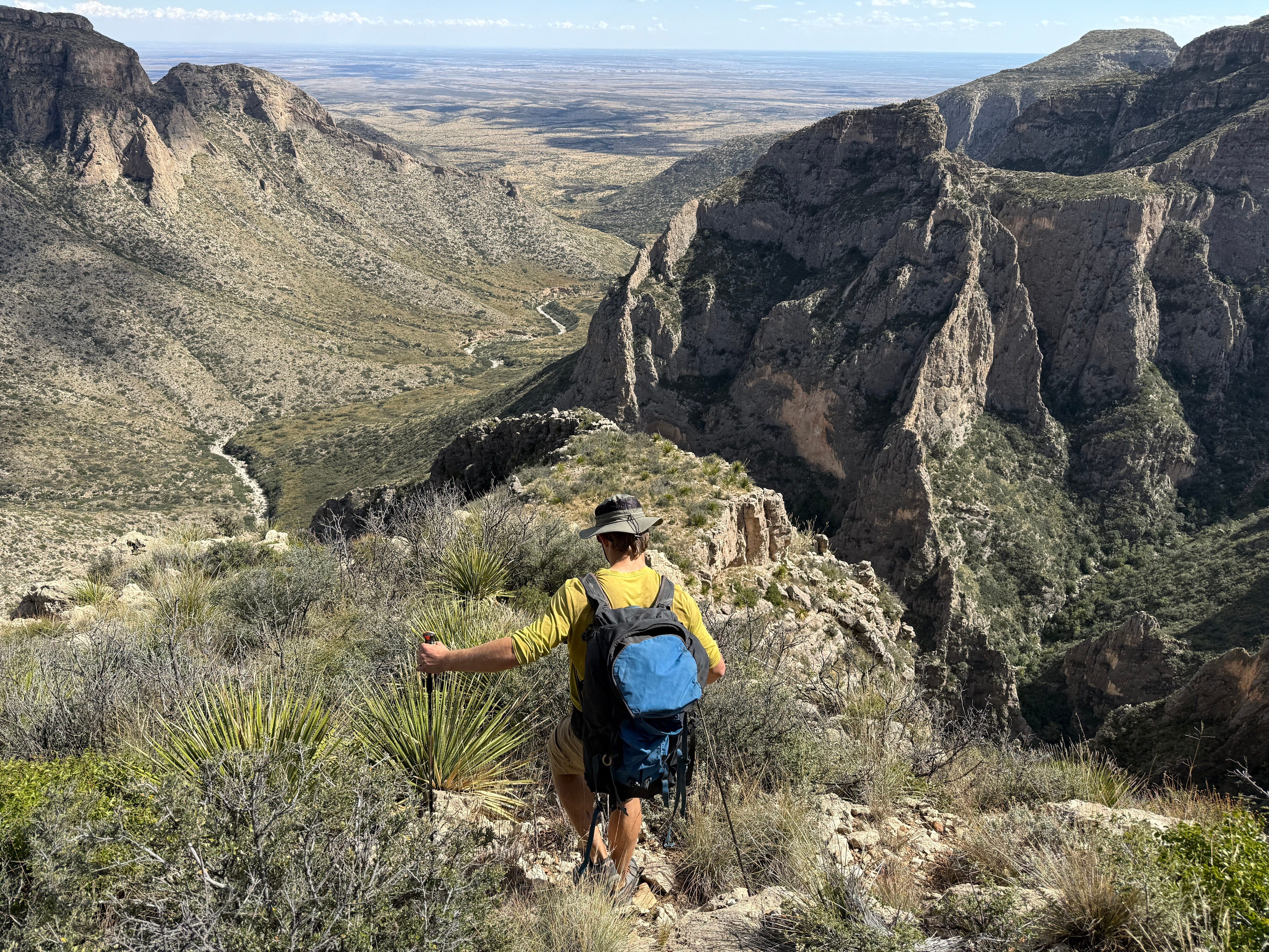
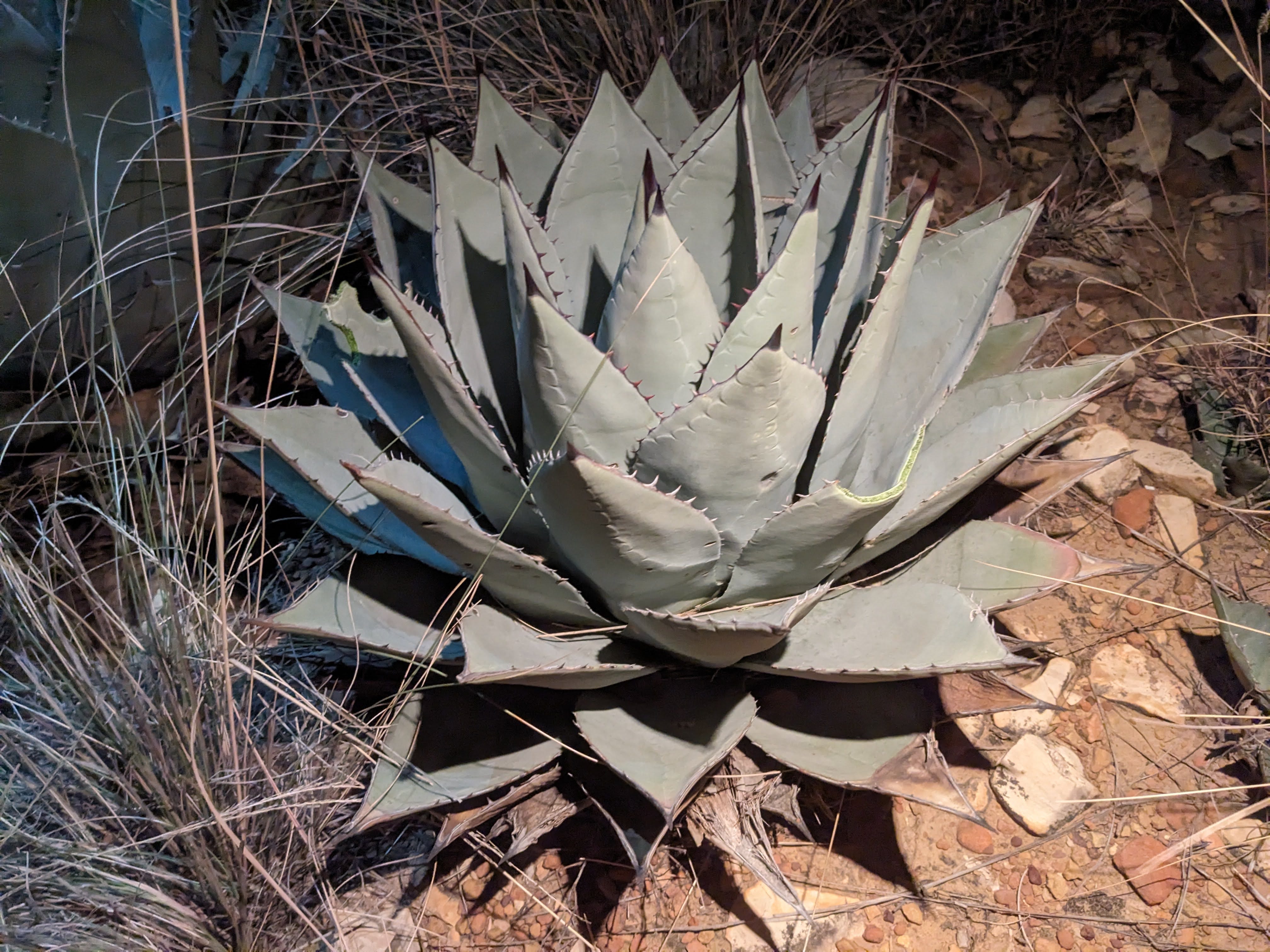
Another factor that makes connecting the ridges and the arroyos complicated is the vegetation. The ridges and arroyos are generally not heavily vegetated, but venturing off either of those paths into the slopes between them brings on bushwhacking. The desert environment of the Guads means the vegetation isn’t incredibly thick, but it is punishing in other ways. Cacti, agave, and other plants have vicious spines and thorns to guard against animals that would eat them for their water. Bushwhacking through these spiky plants requires some care.
Back in March, I found a cave in the Guads using LIDAR. It showed up as a series of deep sinks at the base of the cliff, which suggested a cliff entrance more than a sinkhole entrance, which was exactly what we found when I brought Ben, Adia, Liam, and Rosie Tobin out for a 10 mile round trip hike to check it out. We found a 30 ft wide arch full of breakdown. Ben Tobin found a way through the breakdown and into a walking-sized space where we were greeted with massive dogtooth spar crystals.
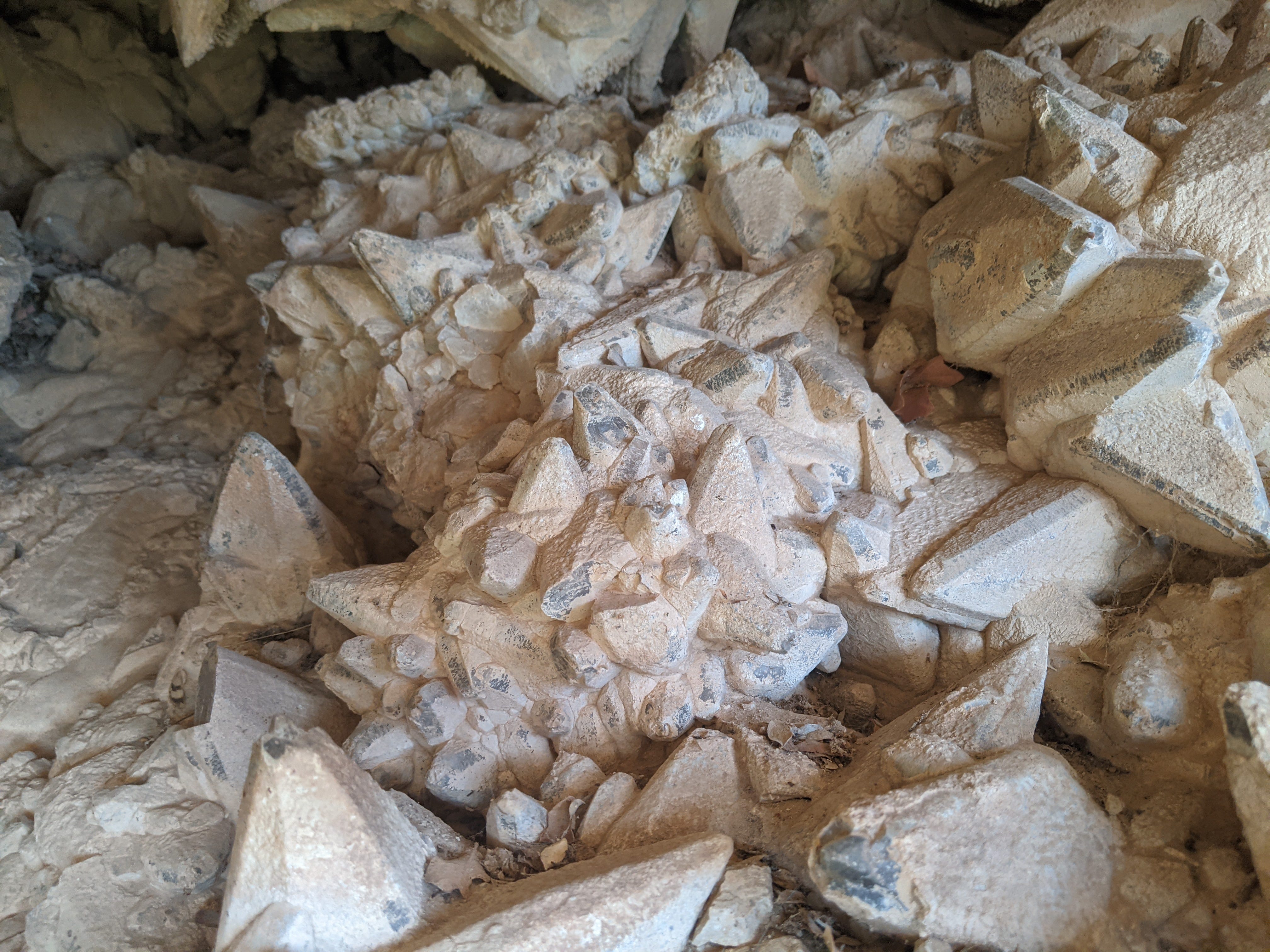
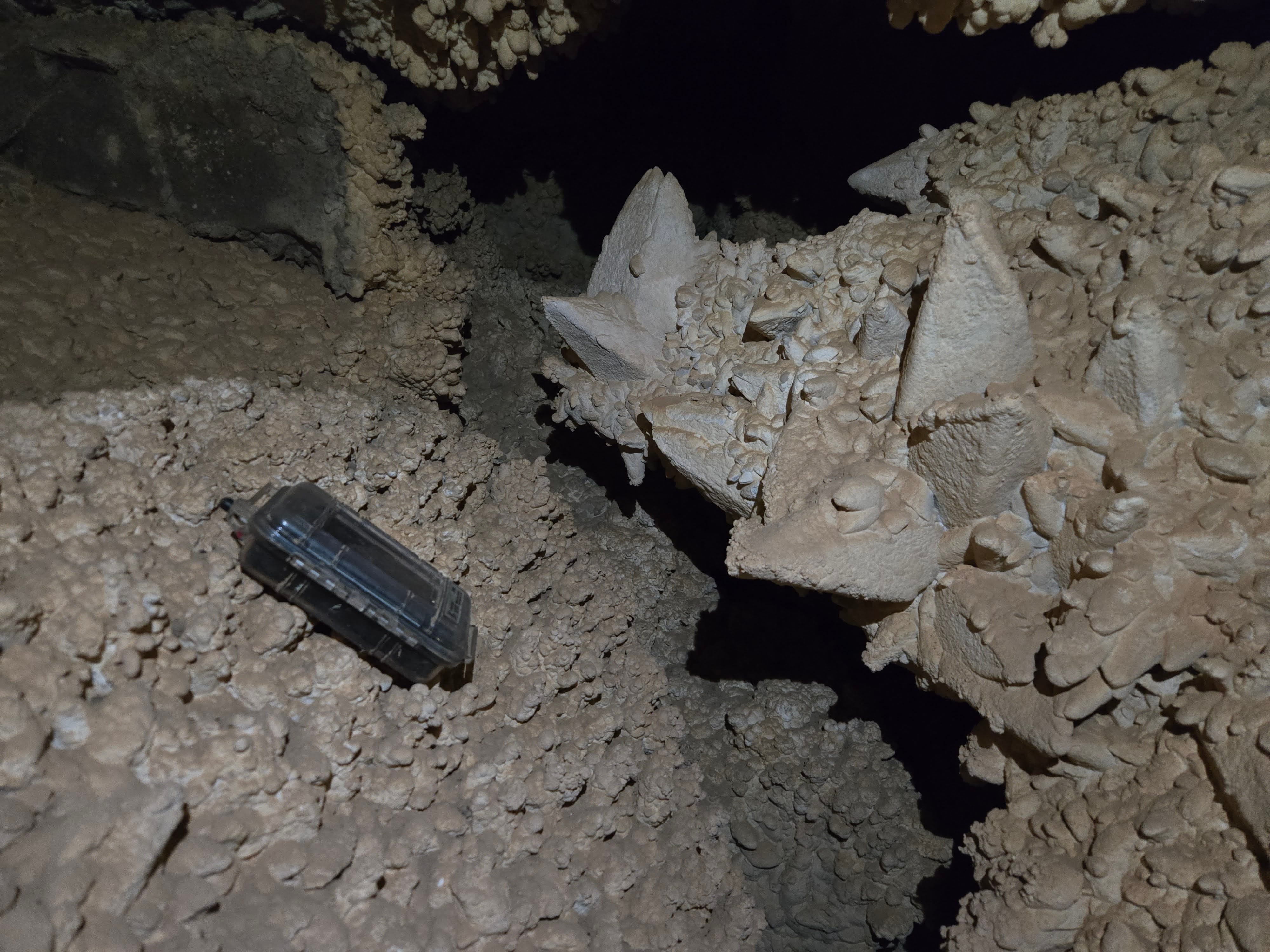
Upon returning to civilization, we learned that we had refound an old lost cave, Big Canyon Boneyard Cave, that Donald Davis and Rick Rhinehart found in the 80s. It never got mapped, so I returned to continue surveying the next November.
On the next trip this past November, I dragged 5 people out on the 10 mile round trip hike to the cave. Many 5-10 shots into the breakdown meant we didn’t rack up that much survey footage. Since we had 5 people, one too many for a survey team, one of them, Corey Hackley, ditched us to check a nearby LIDAR point. When he rejoined us several hours later in the cave, I was shocked and excited to hear that he found multiple deep pools of water in Big Canyon, just upstream of where we left the canyon bottom to go to the cave at the base of the cliffs in the canyon. We hadn’t yet finished the cave, so I knew that on my next trip out here, I would camp overnight at that water instead of doing a marathon day trip with 10 miles of hiking and several hours of surveying.
And that’s exactly what I did. Two weeks later on Saturday December 13th, I brought six people out to the cave. Travis Broadhurst, Kayla Navarro, Bram Lovelace, Evan Peairs, and Anastasiya Razumovska. I was determined to survey until we killed the cave, as seemed likely, or if the cave actually ended up going, then survey for many hours, not saving any energy for a long hike back.
When we got to the cave, we split into two survey teams to work on the two areas in the caves with leads (really, gaps in the breakdown I hadn’t gone in). All of the leads in this area ended almost immediately, unfortunately. So the cave was dead! We spent another hour or so poking and prodding into every hole in the breakdown/boneyard until we were totally confident that the cave doesn’t go.
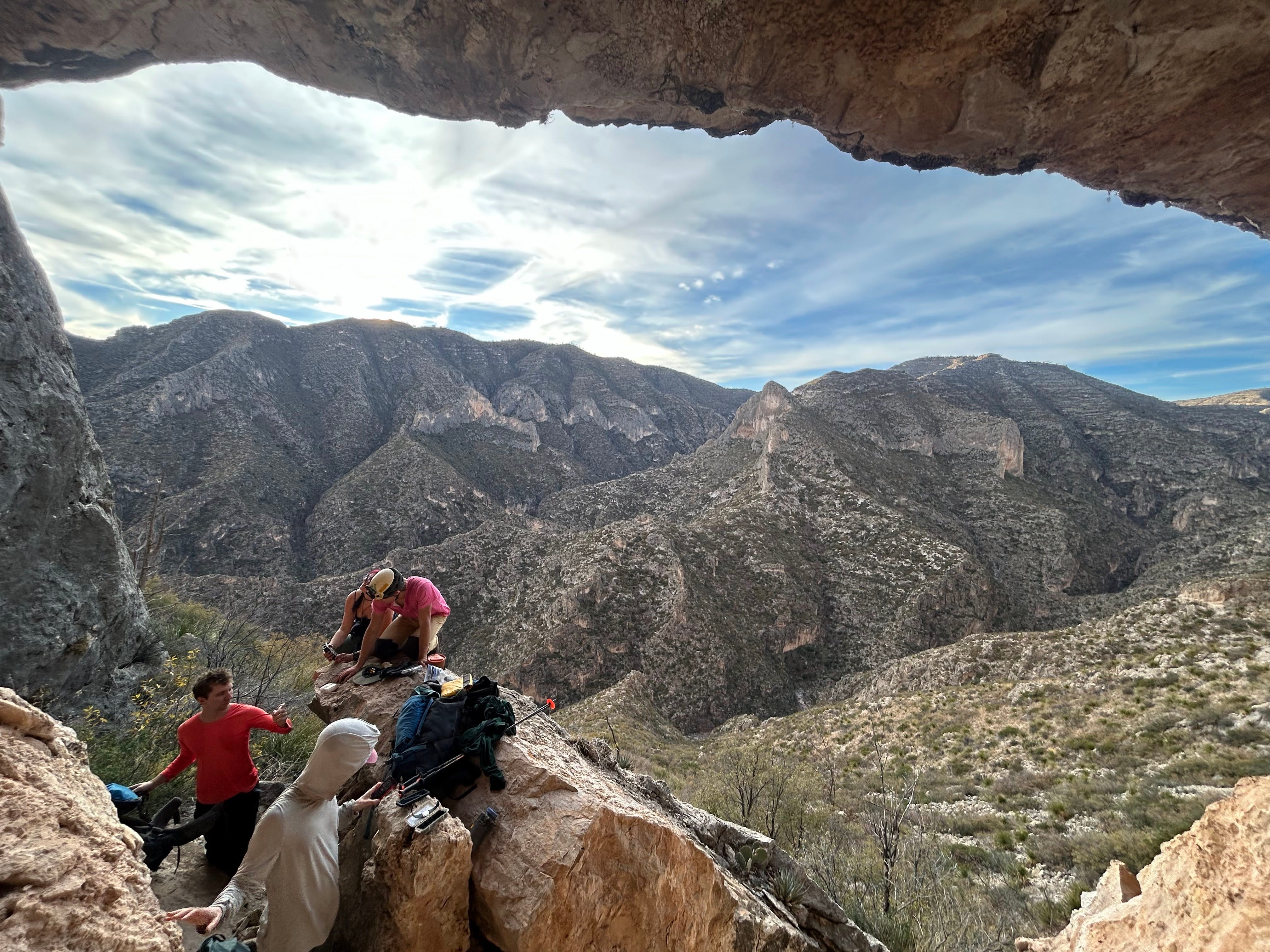
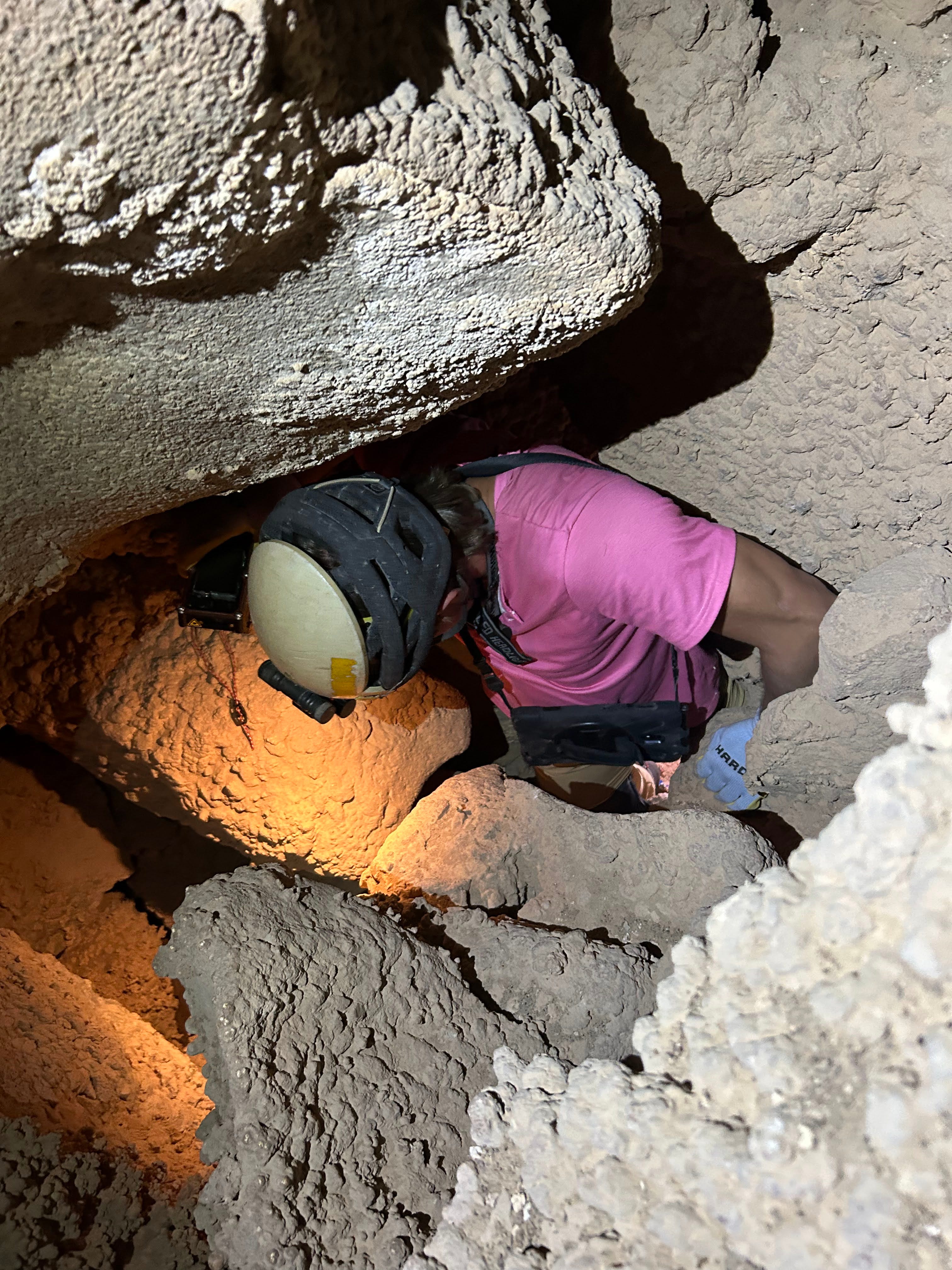
We got out of the cave, packed up our stuff, end enjoyed the Geminids meteor shower for a few moments before moving on to our next objective. On the last trip out here, I had refound another old cave that Donald Davis found in the 80s, based on someone’s description of where it should be relative to Big Canyon Boneyard Cave. This cave, Little Darling Cave, had a lead in it past a tight flowstone constriction. I brought everyone 300 ft north along the cliff band to this new cave, and we started surveying. Little Darling Cave was a much easier to survey and sketch, as it was actually one clear passage instead of a jumble of breakdown and boneyard passage.
Little Darling Cave starts as a walking tube that turns into a large decorated flowstone chamber. As often happens in the Guads, I was surprised to find water streaks and drips within 100 ft of the arid desert air outside. Where does this water come from!?
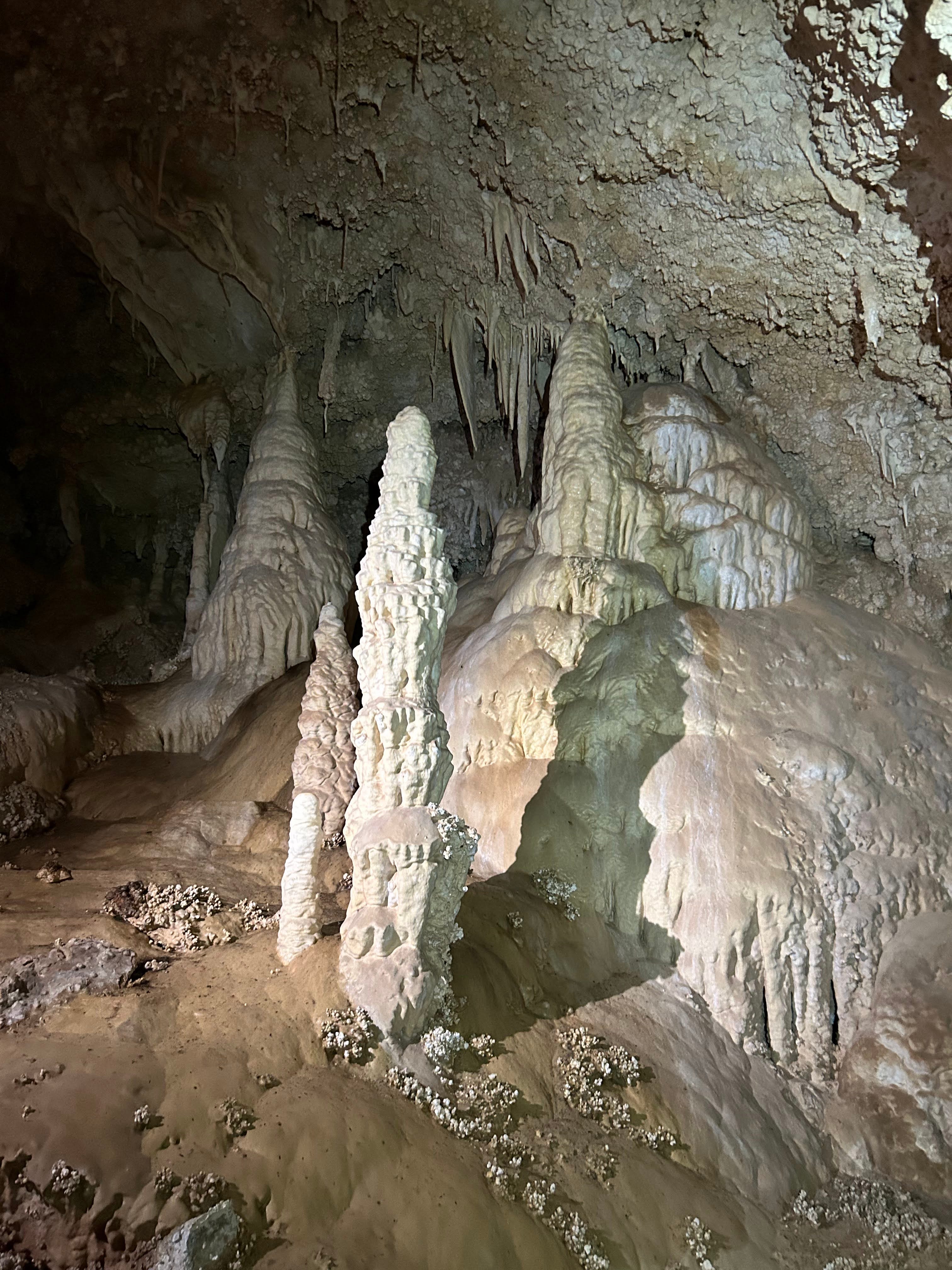
When poking around all the walls, we actually found two leads beyond tight flowstone constrictions. These took some special care to pass through without breaking the formations that made the constriction. Both leads led to some wonderfully decorated passage beyond, but they didn’t go. The cave totaled 155 ft.
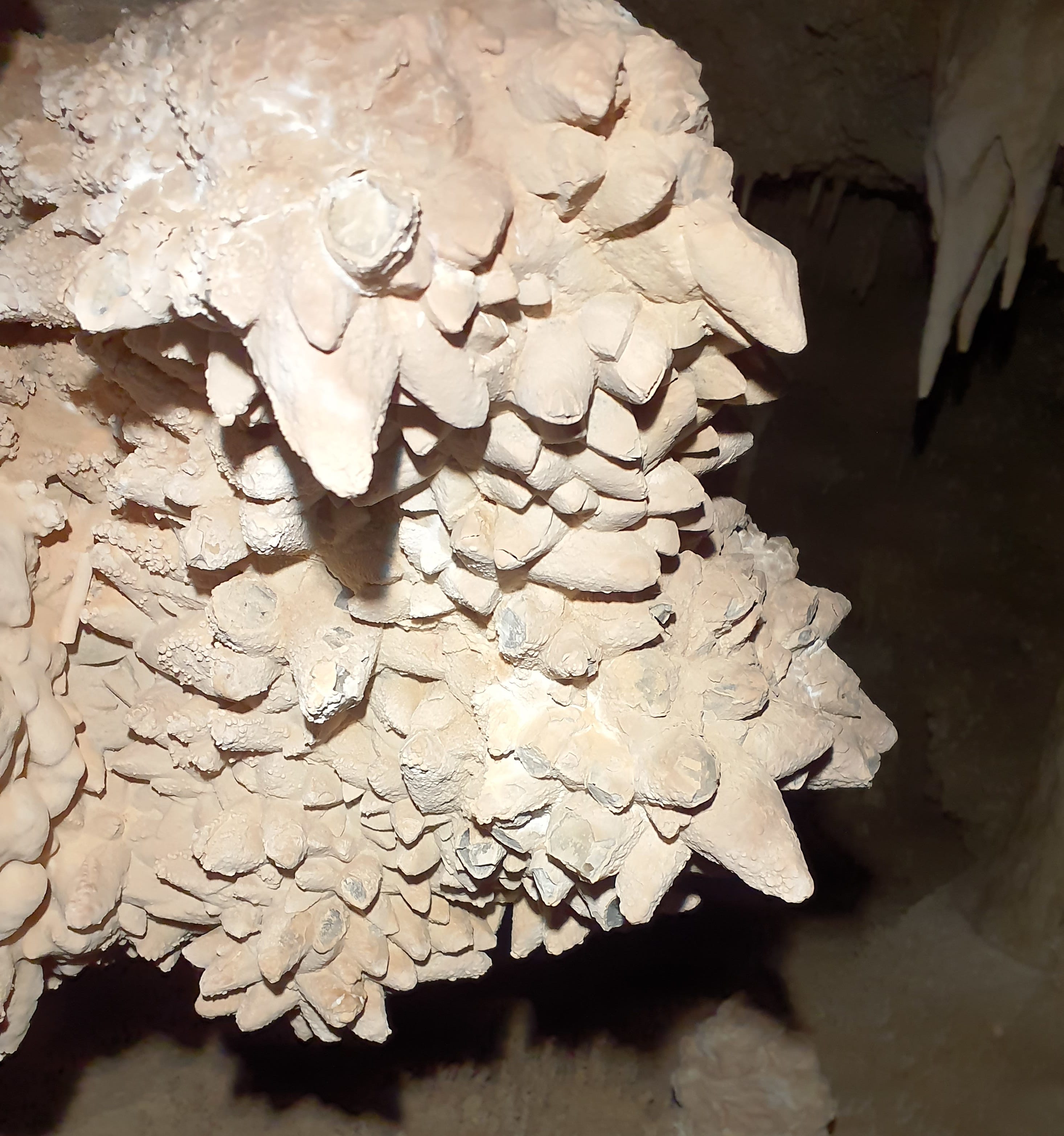
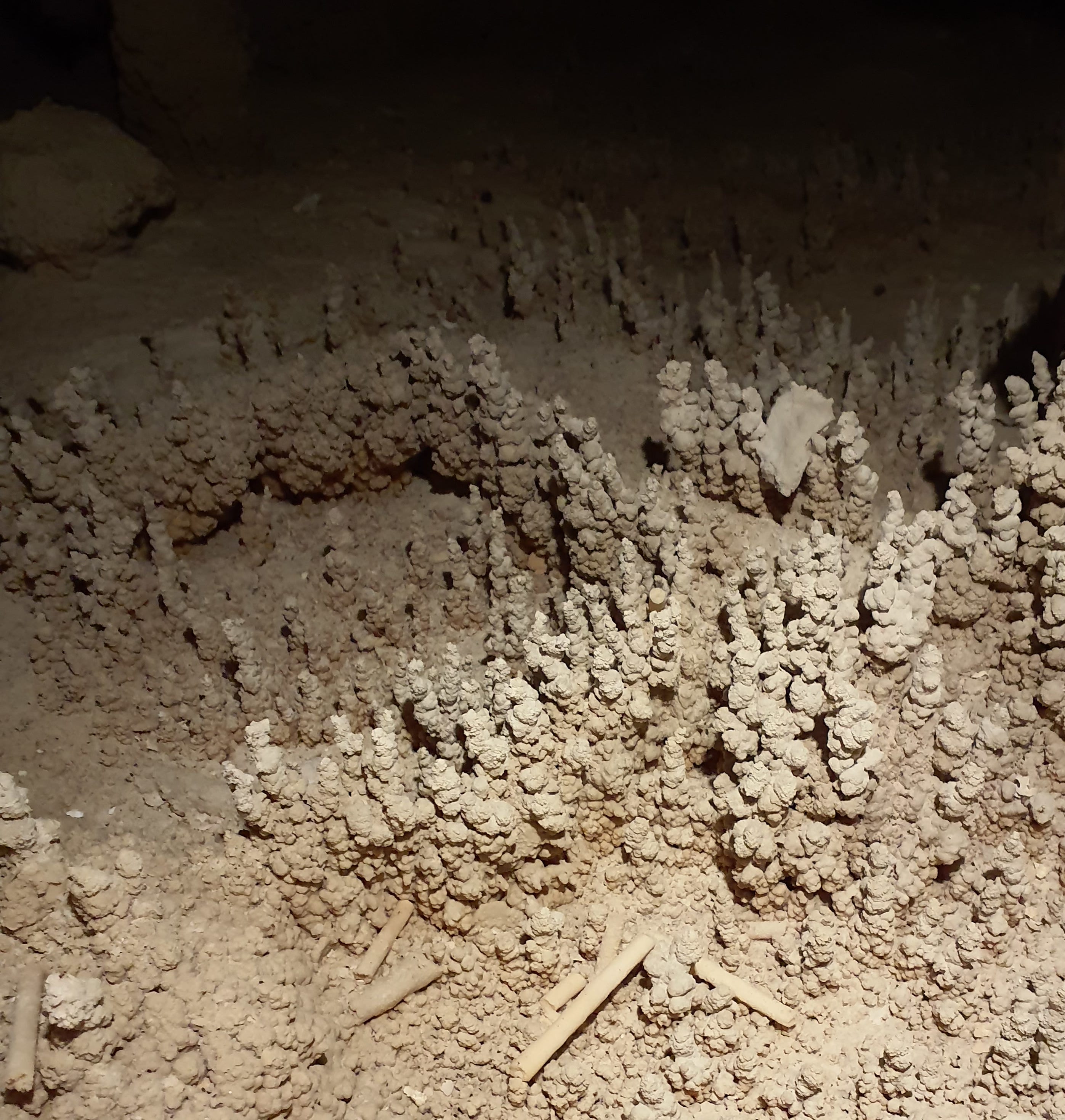
With both of the cave objectives done for the night, it was time to pack up, head back down to the bottom of the north fork of Big Canyon, and head upstream to our alleged water source. I hadn’t seen this water source myself, and all of us were getting to the end of the water we packed out here, so I was slightly nervous about actually finding water for everyone.
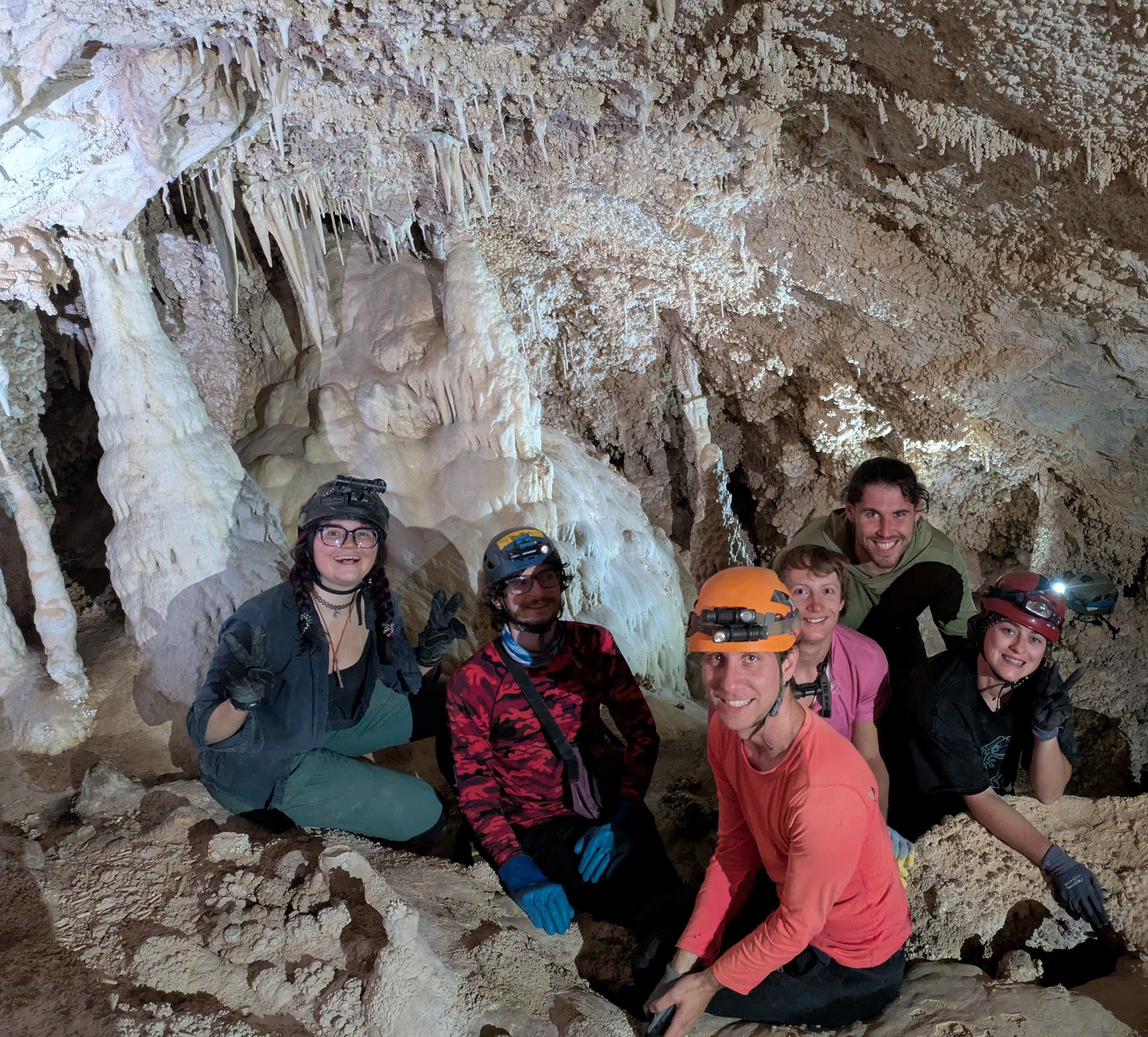
We got out of the cave around 10pm, just in time to make it to camp at the peak of the Geminids that night at 11pm. The hike down the steep vegetated slope below the cave was unpleasant as always, but made much more pleasant by the thought that we wouldn’t have to hike 5 miles back to the car after this. Just a half mile or so upstream in a flat arroyo to some water, hopefully.
After 10 minutes of walking upstream from where we regained the arroyo below the cave, we were delighted to find a pool of water. This pool was brown and stagnant, so we wouldn’t want to drink it, but it was a promising sign that more and better water was to come.
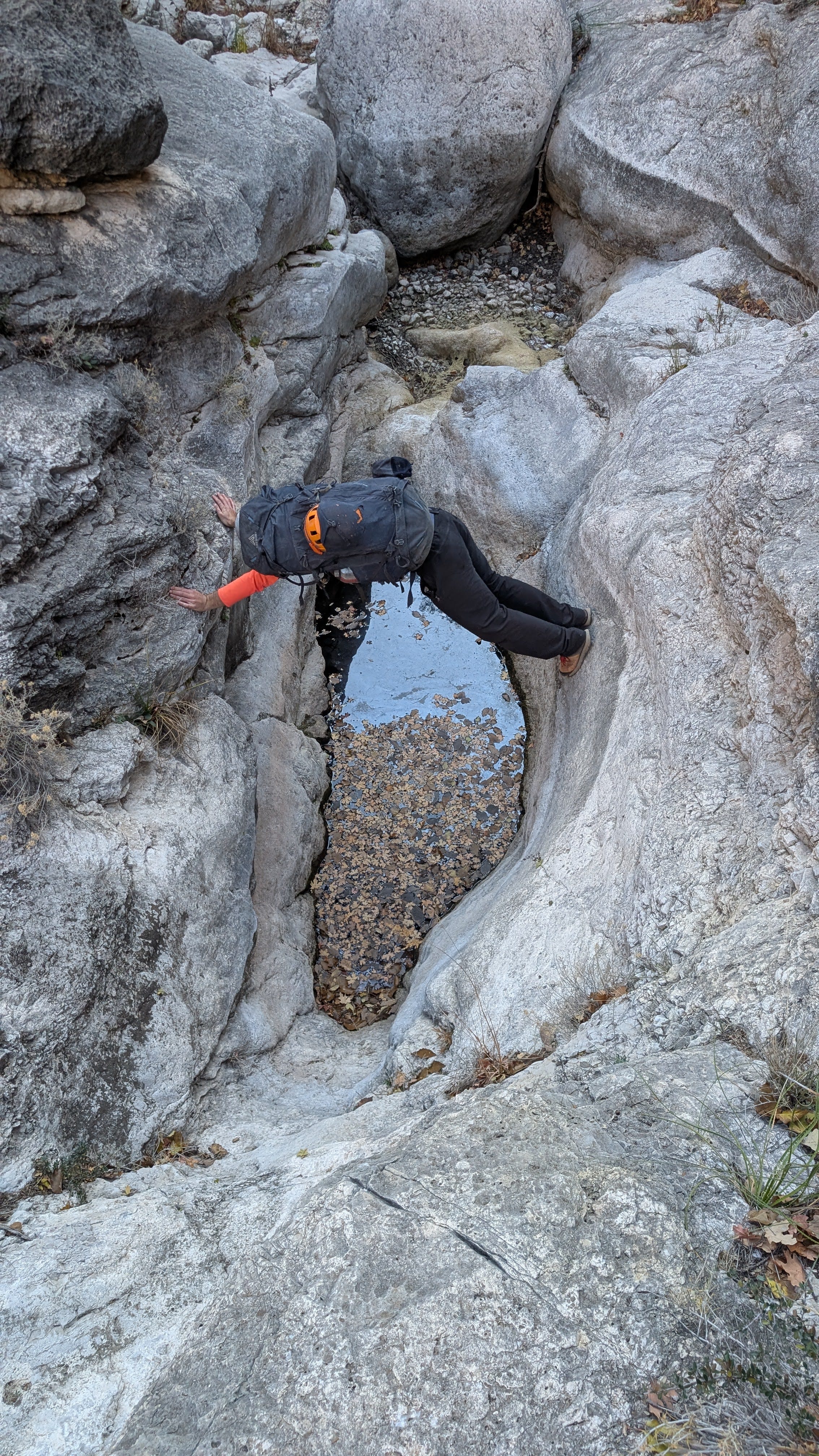
A few more minutes upstream of that first pool, we started seeing more frequent pools. Then the pools started to be connected by a small flowing stream, which made the water clear and clean looking. Once we found a series of flat spots fit for six people to sleep (at 32.04087, -104.75269), we triumphantly dropped our packs and began setting up camp. Just beyond this spot, the water got deep and the canyon walls got tall and narrow, which would have made advancing further without getting wet tricky. It seemed like this campsite was put here perfectly for us.
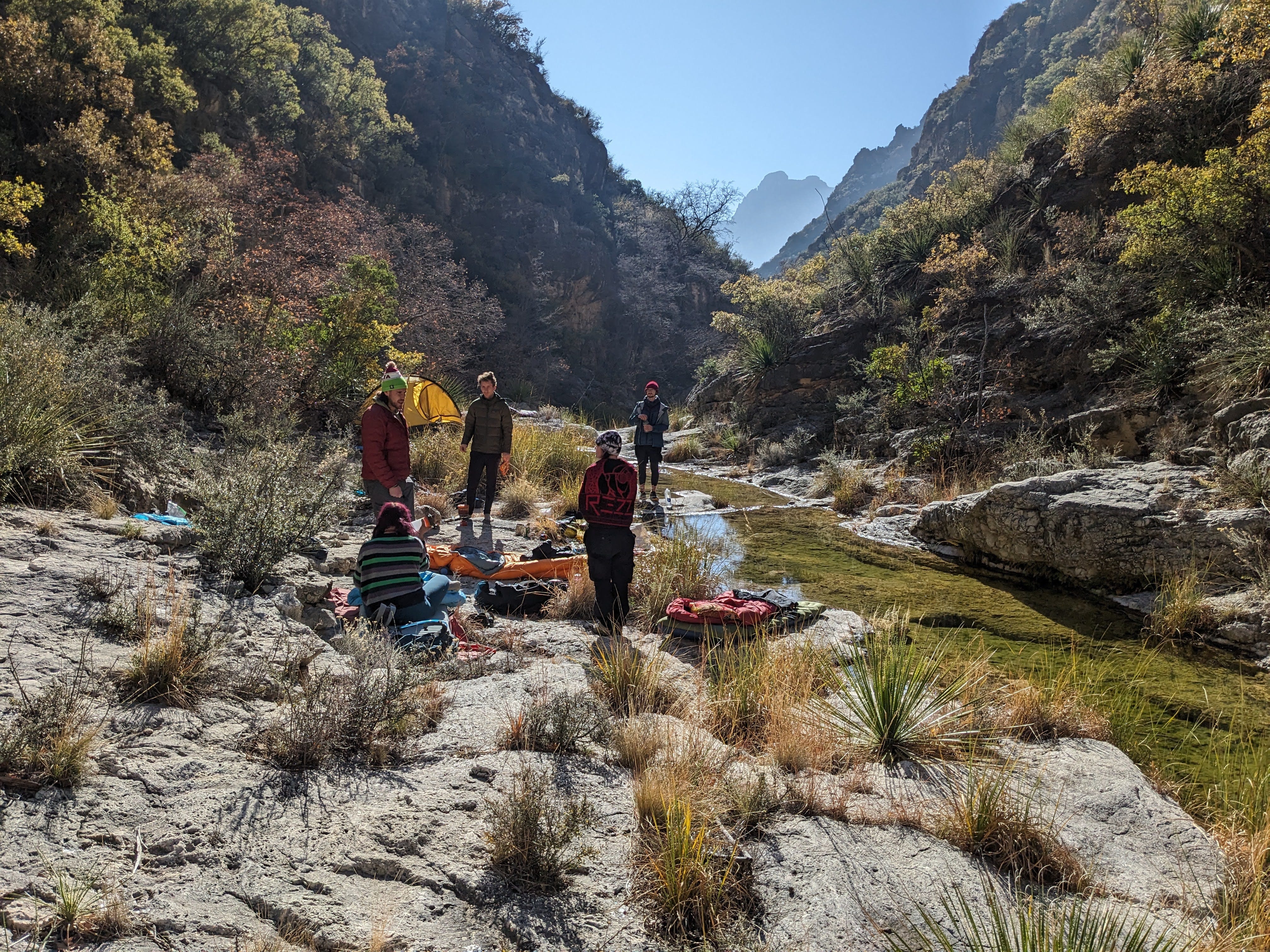
We cooked our dinners by the water while the Geminids raged above us. Falling asleep to the meteor shower was an excellent end to our long day.
We slept in the next day and woke up when the sun rose over Lonesome Ridge and hit our campsite in mid morning. We took our time packing up camp and making breakfast, as we wanted to enjoy every last moment in this unique place in the Guads. When it was finally time to go, we began down the arroyo towards some cave leads I wanted to check near the mouth of Big Canyon.
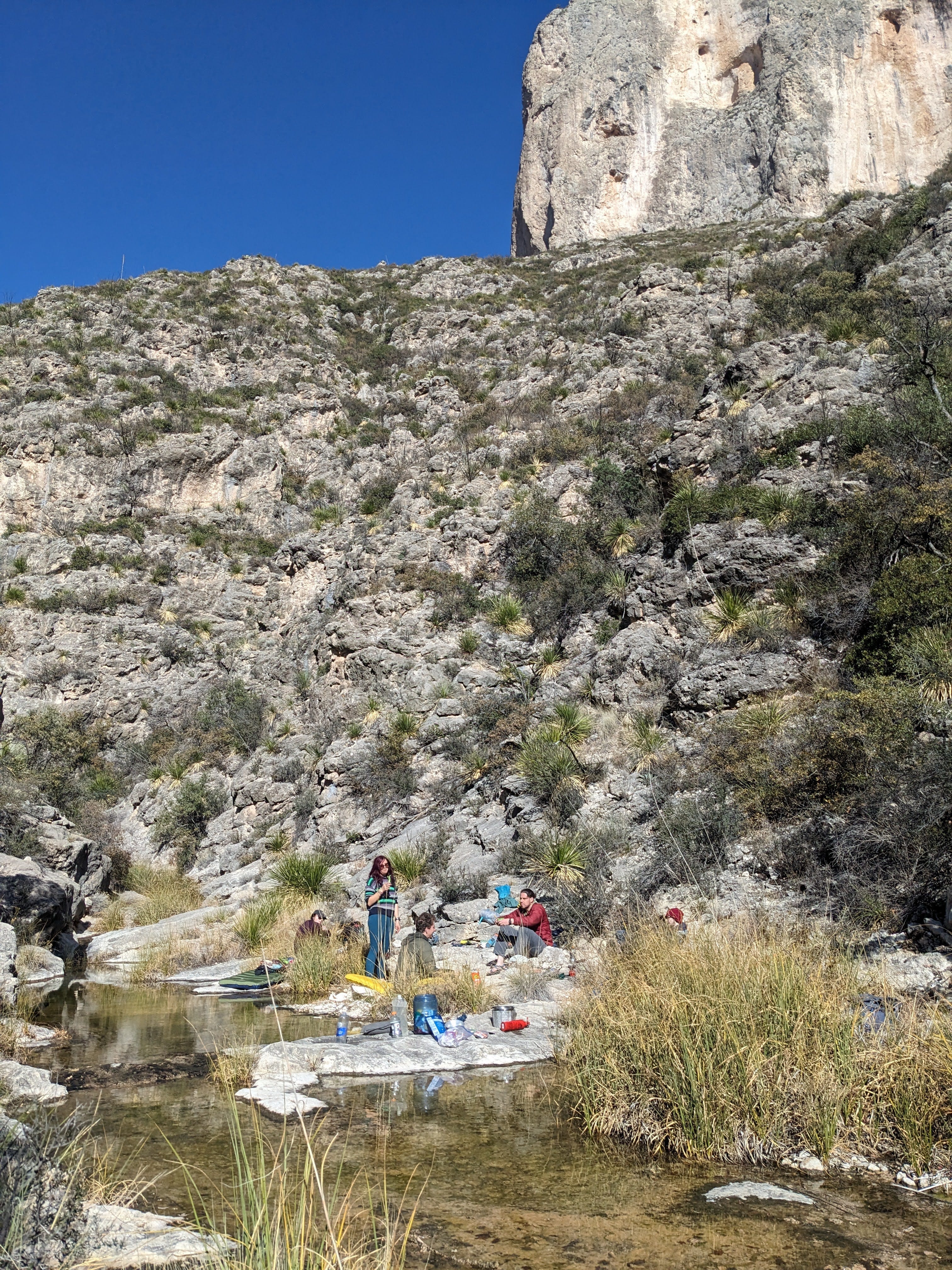
When we got to right below the points I wanted to check, we split up. I went up the hill to check a dark spot I could see from below, and the others checked two dark spots below that. We reconvened a few hours later after no one found anything that goes. One of the points I had in mind ended up being a 15 ft long cave with formations, but it didn’t go.
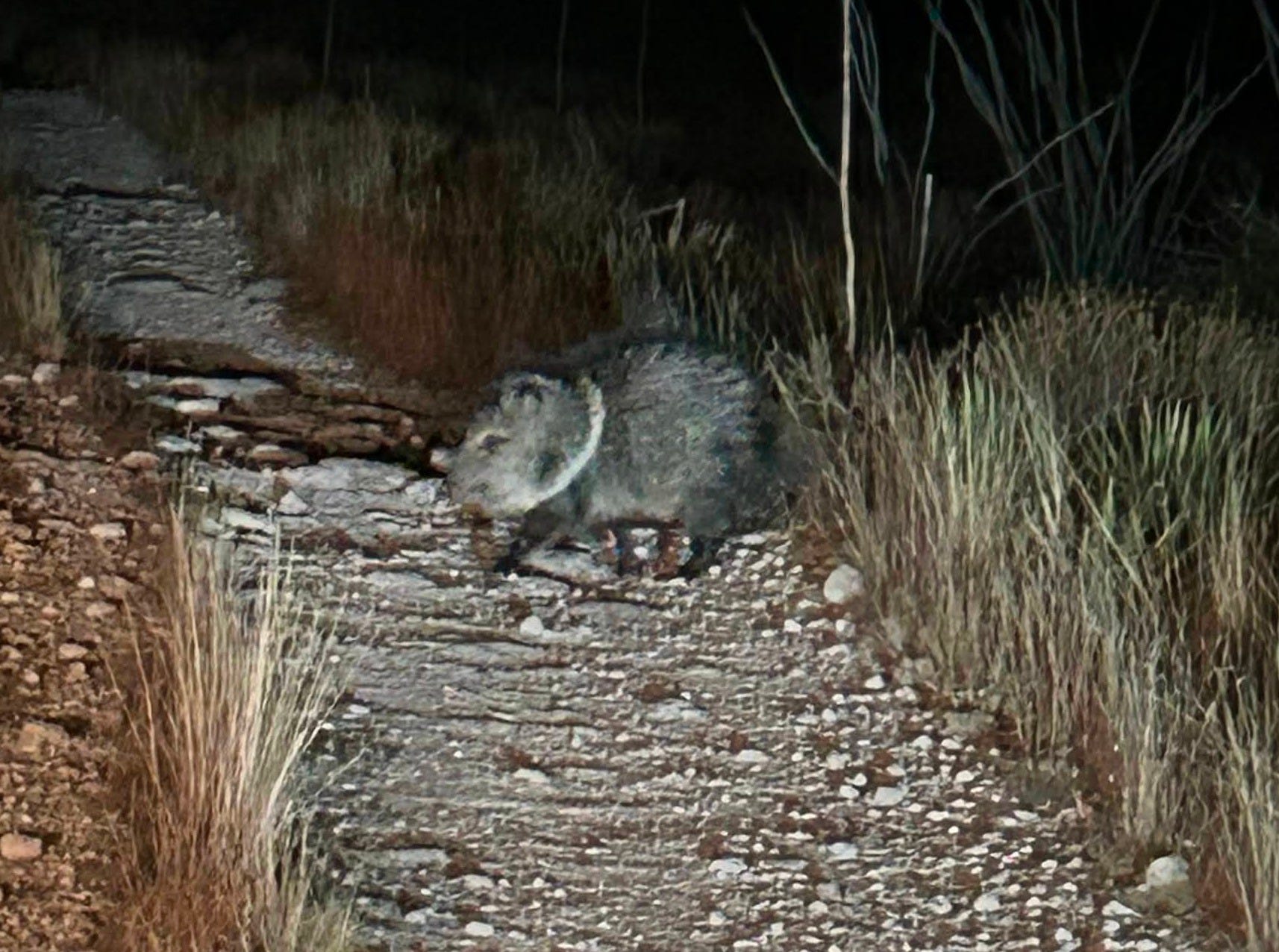
From there we continued on out of Big Canyon. We made it back to the cars right around sunset. On the drive back Sunday night, we saw a pack of wild javelinas cross the road. I even got pictures and a video of one of them. Look at him go!
I’ve since heard that there is reliable water in the north, middle, and south forks of Big Canyon, and in the north and south forks of McKittrick Canyon. I’ll certainly be going to those canyons to ridgewalk and enjoy some more nights out in the Guads.
Also some nice caves in Texas. But not Fort Stanton, which is one of the most incredible caves in New Mexico.
Good to read that someone finally visited these two caves.
Donald Davis and I came upon them in January 1987 on a cave-hunting trip with Jerry Atkinson and Pat Kambesis. Donald found Big Canyon Boneyard Cave first, and while he explored it, I investigated Little Darling Cave. After Donald completed his exploration of the spar cave, I invited him to join me at Little Darling. In the late afternoon in January, the sun shines directly into the cave, brightly illuminating the room as if it was a commercial cave. It is a memory I'll not forget.
These discoveries were included in a report of mine in the Spring 1987 edition of Colorado's Rocky Mountain Caving.
Thank you!